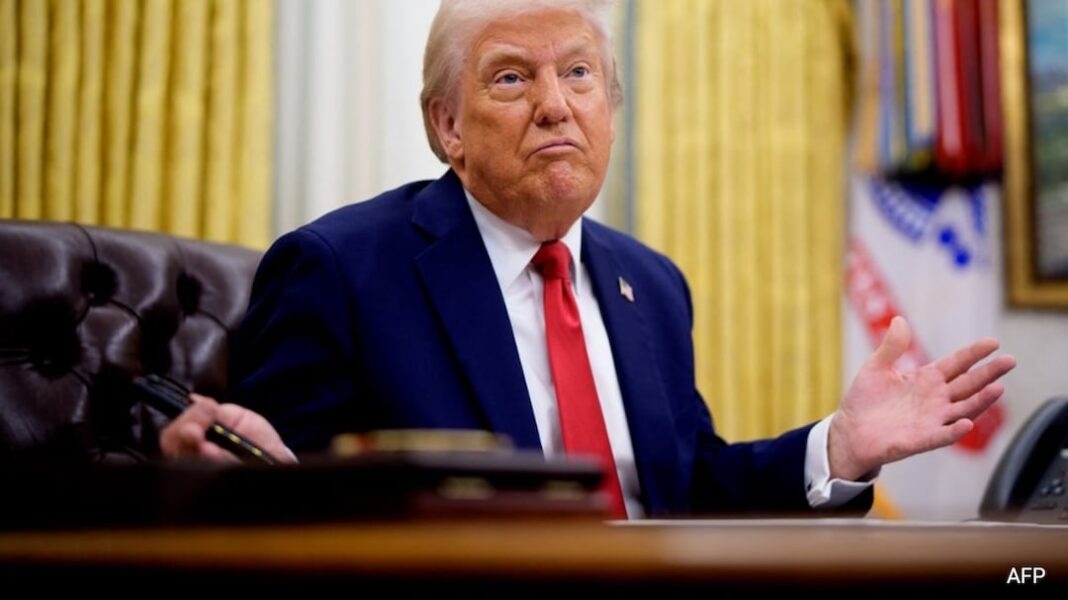

The US Supreme Court has invalidated several of the broad tariff orders issued by former US President Donald Trump, a significant blow to his “America First” trade policy. However, just hours after the decision, Trump announced a new 10 percent tariff on all imports to the United States, claiming that it would go into effect “almost immediately.”
Under a White House factsheet, the new 10 percent tariff will go into effect on February 24 for a period of 150 days. Certain industries under separate inquiries, such as pharmaceuticals, and imports to the US under the US-Mexico-Canada Agreement, will be exempt. Even nations that had previously negotiated tariff deals with the Trump administration would now be subject to the standard 10 percent tariff, although more “appropriate” or “pre-negotiated” rates may be applied at a later date.
The news has been a boost to the global markets. Analysts pointed out that the GIFT Nifty had gone up by over 1 percent on the news, suggesting that there could be a gap-up opening for the domestic indices at the beginning of the trading week, unless new negative global triggers emerge. Investor sentiment seems to have brightened with the expectation that the tariff structure may become more predictable than in the previous proposals.
Market analysts have stated that while the overall environment on global trade is still uncertain, the knowledge of tariff rates, even at 10 percent, will help in reducing volatility. Sectors that are more export-oriented, such as IT services, auto components, and manufacturing, will be closely watched for any impact on earnings.
However, the ruling by the US Supreme Court is also being interpreted as a major control on the trade powers of the executive. The fact that the Supreme Court has rejected most of the previous tariffs indicates that there is institutional control over trade policy, even as the administration looks for other ways to introduce new tariffs.
The broader global trade environment continues to remain sensitive. The temporary nature of the 150-day tariff window suggests room for negotiations and possible recalibration. A White House official indicated that the administration may seek to implement more appropriate or pre-negotiated tariff rates in the future, keeping the door open for diplomatic discussions.
For India, the focus will be on balancing export competitiveness while progressing with the broader bilateral trade framework. Policymakers are expected to monitor sector-specific impacts and engage with US counterparts if necessary.
In the short run, the equity markets are expected to respond favorably to the clarity generated by the announcement, although global trends and geopolitical events would continue to impact market sentiment.