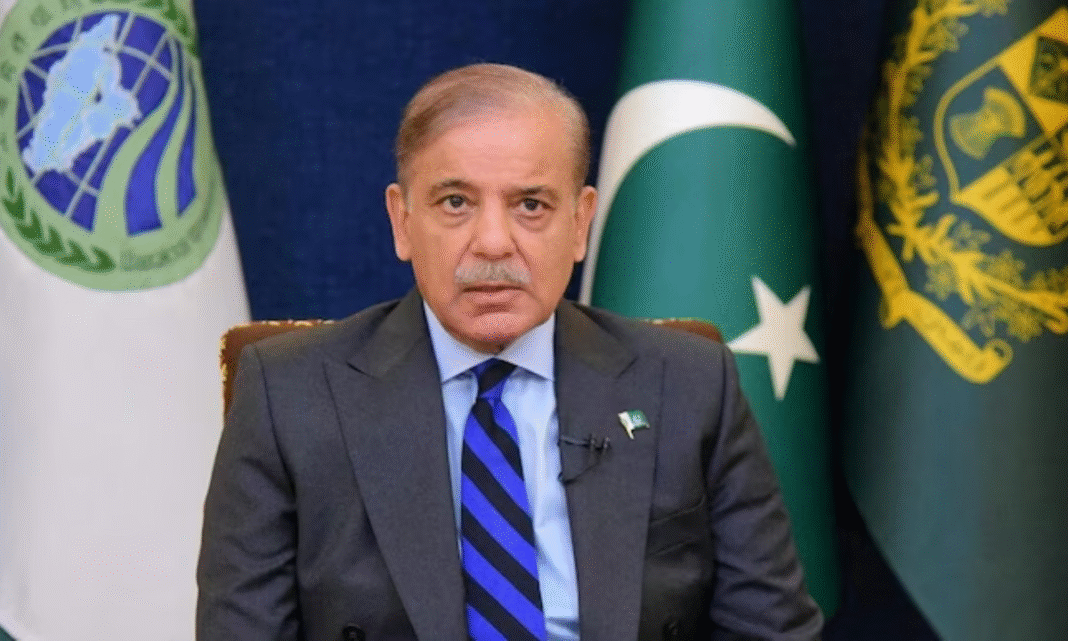

Islamabad, 11 November 2025 – In a bold public statement, Pakistani Prime Minister Shehbaz Sharif accused neighbouring India of orchestrating the suicide bombing that struck outside a court complex in the capital, killing at least 12 people and injuring dozens. He further alleged that India’s “terror-proxies” were behind a near-simultaneous assault on the Cadet College Wana in South Waziristan.
The attacks
On 11 November 2025, a suicide bomber detonated explosives outside the gates of a district judicial complex in Islamabad’s G-11 sector, killing 12 and injuring 27 others, according to Pakistani officials. The explosion tore through vehicles parked near the courthouse, damaging nearby offices and shops.
Sources: Courthouse News, AP News
Separately, security forces in South Waziristan foiled an attack on Cadet College Wana, killing two militants and cornering three others inside the premises. Officials said the attackers tried to breach the main gate using an explosives-laden vehicle, similar to tactics seen in past militant operations.
Source: The Express Tribune
Sharif’s accusations
Prime Minister Sharif, speaking through Pakistan’s official news agency, accused India of sponsoring militant groups operating from Afghan territory, calling them “terrorist proxies” used to destabilize Pakistan.
“These attacks are a continuation of India’s state-sponsored terrorism aimed at weakening Pakistan’s internal stability,” Sharif declared.
Source: India Today
He claimed the Wana assault was carried out by the same network that organized the Islamabad bombing, adding that Afghan soil was being exploited “under Indian patronage.”
Source: India Today
Response and context
Interior Minister Mohsin Naqvi reinforced the prime minister’s position, saying the attacker attempted to enter the court premises and, after failing, detonated his explosives near a police van. He alleged the act was “carried out by Indian-backed elements and Afghan Taliban proxies” linked to the Pakistani Taliban.
Source: AP News
In the Wana incident, the Pakistan Army’s media wing identified the attackers as members of a group called Fitna al Khwarij, describing it as an Indian-sponsored proxy. The army warned of “decisive action” if militants continued to find refuge across the Afghan border.
Source: Business Recorder
Evidence shortfall & diplomatic tensions
However, no verifiable evidence has been presented publicly linking India to either attack. Analysts noted that Sharif’s statements came within hours of the explosions, without supporting documentation or intelligence disclosures.
Source: India Today
New Delhi has yet to issue an official response, but historically, India has dismissed such claims as “politically motivated and baseless.”
Source: Anadolu Ajansı
Experts warn that these accusations could further strain India-Pakistan relations, already marked by decades of mistrust and periodic cross-border hostilities.
Source: The Washington Post
Significance and reactions
The Islamabad blast represents the deadliest attack in the capital in several years — a grim reminder of Pakistan’s vulnerability to resurgent militancy.
Source: Courthouse News
The Wana incident drew parallels to the 2014 Army Public School massacre in Peshawar, where 140 students were killed. Officials said the foiled attack could have caused a similar tragedy.
Source: Business Recorder
By blaming India, the Sharif government signals a hardening stance toward its eastern neighbour and exerts pressure on Kabul to act against groups operating along the border.
Source: Dawn
What’s next?
-
Pakistan may escalate diplomatic and military pressure on both Afghanistan and India over cross-border militancy.
-
India is expected to reject the allegations and demand credible proof.
-
Pakistan may seek international condemnation of what it calls “Indian-state terrorism.”
-
Rising tensions could heighten regional instability, especially between the two nuclear-armed neighbours.