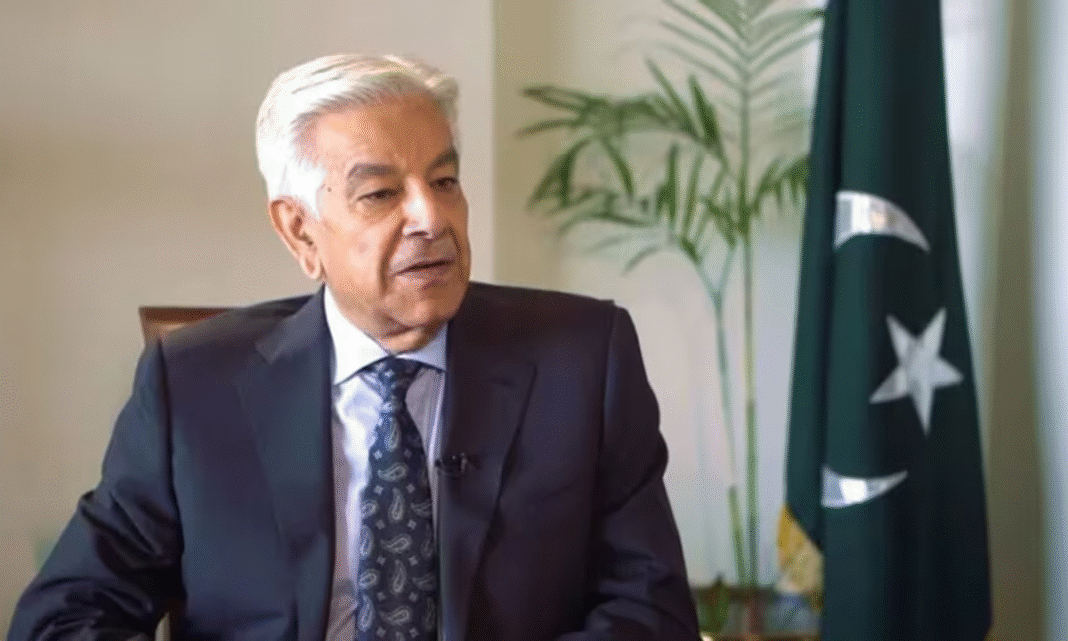

Islamabad, November 12, 2025 — Pakistan’s Defence Minister Khawaja Asif has accused Afghanistan’s Taliban government of allowing its soil to be used for terrorist attacks against Pakistan, intensifying tensions between the two neighbours. Speaking to reporters on Tuesday, Asif alleged that militant groups operating from Afghan territory were behind the recent suicide bombing in Islamabad that killed 12 people and injured 36 others.
The minister also downplayed the Delhi blast, suggesting that India was using the incident to “politicise regional security issues” and deflect international scrutiny from its “role in destabilising South Asia.”
Islamabad suicide attack triggers blame game
The comments come just days after a suicide bomber detonated explosives outside the district court complex in Islamabad’s G-11 sector, an attack that has shaken Pakistan’s security establishment. The bombing killed at least 12 people, including several police personnel, and injured more than 36.
Khawaja Asif said initial investigations pointed to “cross-border coordination” and claimed the attack was executed by “terrorist networks sheltered inside Afghanistan.”
“Afghanistan must take responsibility. These groups operate freely across the border and attack Pakistan without fear of consequence. We have repeatedly shared intelligence with Kabul, but the response has been disappointing,” Asif said.
He further added that Pakistan had shown restraint for years but “would not remain silent if the Taliban administration continues to ignore the threat.”
Downplaying the Delhi blast
Asif also commented on the recent blast in Delhi, which Indian authorities are investigating as a possible terror incident. While offering sympathy for the victims, he accused India of “politicising the tragedy” and using it as a pretext to malign Pakistan internationally.
“India has a habit of dragging Pakistan into every internal security incident,” Asif said. “Instead of cooperating for regional peace, New Delhi turns every unfortunate event into a propaganda tool.”
Analysts view Asif’s remarks as part of Islamabad’s broader effort to shift international attention from internal instability and refocus the narrative on external threats — particularly the resurgence of militancy in Pakistan’s northwestern provinces.
Rising tensions with Afghanistan
Relations between Islamabad and Kabul have worsened since Pakistan launched cross-border military operations targeting groups linked to the banned Tehreek-e-Taliban Pakistan (TTP). Islamabad accuses the Taliban of harbouring TTP militants who have escalated attacks inside Pakistan since 2021.
In recent months, Pakistani officials claim that dozens of attacks have originated from Afghan territory, including assaults on army posts and police convoys in Khyber Pakhtunkhwa and Balochistan.
Afghanistan’s interim government has rejected the allegations, saying Pakistan should “look inward” to address its own security lapses. Taliban spokesperson Zabihullah Mujahid said on Monday that Afghanistan “does not allow anyone to use its soil for terrorism” and urged Pakistan to stop “blaming others for its failures.”
Diplomatic and regional impact
Experts warn that the renewed blame game could further destabilise bilateral relations, disrupt cross-border trade, and affect regional counterterrorism cooperation.
Political analyst Dr. Ayesha Siddiqa told Dawn:
“Pakistan’s security narrative has once again become Afghanistan-centric. Without constructive dialogue, both countries risk deeper hostility that benefits militant groups.”
The situation also complicates Pakistan’s relations with India, which has accused Islamabad of supporting cross-border terrorism for decades. Asif’s dismissal of the Delhi blast as “political theatre” could inflame diplomatic tensions further.
Islamabad’s internal challenges
Security agencies remain on high alert following the Islamabad attack. Interior Minister Mohsin Naqvi has ordered increased surveillance in major cities and enhanced protection for government buildings.
The Islamabad suicide bombing is one of the deadliest in recent years, raising fears of a resurgent terror wave reminiscent of the mid-2010s. Officials acknowledge that Pakistan’s internal security environment remains fragile, with the TTP and other militant groups regrouping in border regions.
What’s next?
Pakistan is expected to press Kabul for stronger action against militant sanctuaries and may seek international mediation through the Shanghai Cooperation Organisation (SCO) or United Nations channels.
Diplomatic sources say Islamabad may also raise the issue with China, its closest ally, given Beijing’s concerns about the spillover of extremism into its Belt and Road projects.
For now, Islamabad’s rhetoric underscores a hardening stance towards Afghanistan and a continuing denial of India’s accusations — reflecting a regional triangle of mistrust that shows no sign of easing soon.