
Cities don’t collapse because they lack infrastructure.
They collapse because they build it like monuments—when it should behave like a network.
Sanitation is the cleanest example of this misunderstanding.
When you see sanitation as a facility, you manage toilets like isolated sites.
When you see sanitation correctly, you manage it as distributed urban infrastructure: a citywide mesh of micro-assets whose combined uptime decides public health, safety, dignity, and trust.
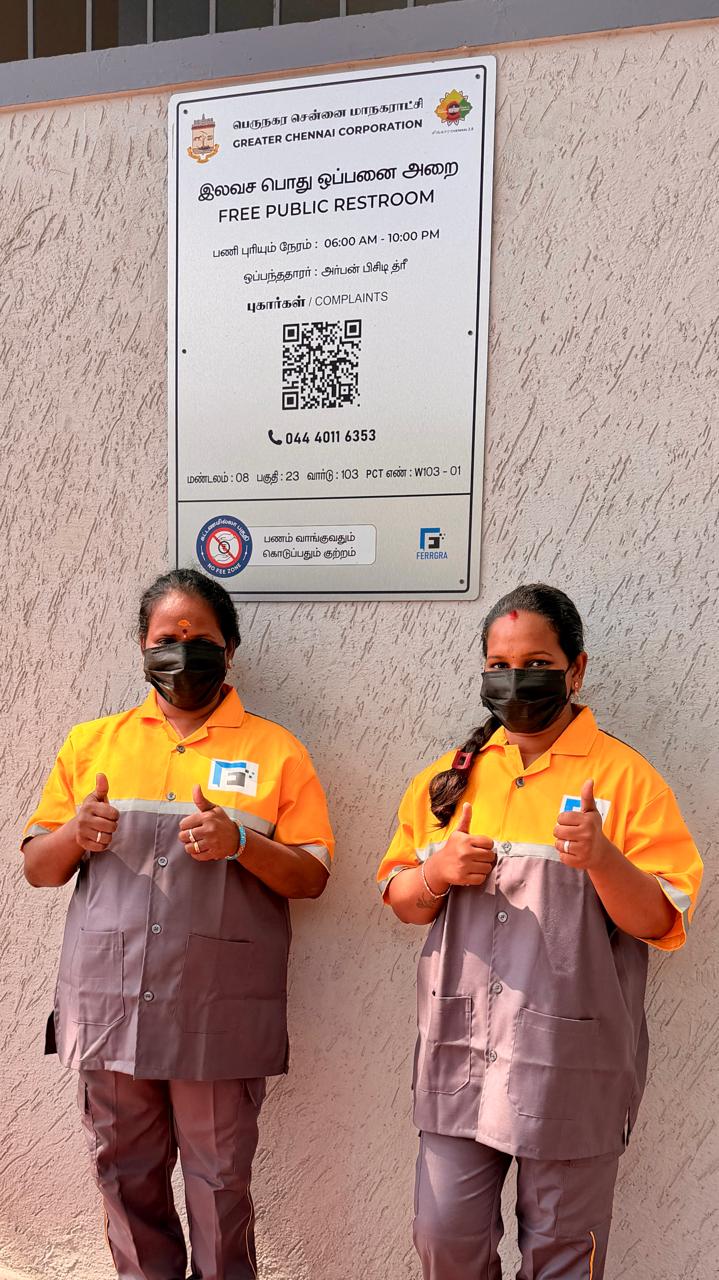
That is exactly what Ferrgra, through Urban PCT Three Pvt Ltd, is executing in Package 3—across Zones 7, 8, 9 (excluding Marina), and 10, covering 2,760 toilet seats under a DBFOT–HAM structure.
This is not “a set of toilets.”
This is a functioning urban system.
Why “distributed” matters
Distributed infrastructure doesn’t create value through one perfect location.
It creates value through reliability at scale.
A public toilet that works occasionally is not infrastructure. It’s luck.
A network that works every day, across hundreds of nodes, changes the city’s behaviour—quietly, permanently.
Ferrgra’s difference is not cosmetic. It’s structural.
Ferrgra runs Package 3 as a portfolio, not as a collection of buildings:
-Each location is a node
-Each node carries defined uptime, hygiene, safety, staffing, and maintenance obligations
-Each obligation is measured
-Each deviation is corrected
That’s how sanitation stops being treated like welfare—and starts behaving like a utility.
The compounding impact across Chennai
When distributed sanitation works, the returns are not “nice-to-have.”
They multiply across the city’s operating baseline:
1) Public health shifts from messaging to control
Disease risk drops not because people were told what to do
—
but because failure points were removed at scale. The environment becomes cleaner by design.
2) Women’s safety improves through availability, not policing
Predictable access changes movement patterns.
Freedom expands because the city becomes more usable—without drama, without headlines.
3) Inclusion becomes real, not performative
Elderly citizens, children, and persons with disabilities benefit disproportionately when access is dependable.
Reliability reduces friction across daily life—quietly restoring dignity where it matters.
4) Street-level order returns without confrontation
Open defecation and nuisance zones are not “behaviour problems.”
They are infrastructure gaps.
Close the gaps at scale, and order returns without conflict.
5) Workforce professionalisation becomes a built-in feature
Ferrgra treats operations as a repeatable service function:
training, supervision, welfare, and accountability are not optional—they’re structural.
6) Governance credibility is earned, not claimed
Performance is not asserted. It is verified.
Independent Engineer validation and KPI-linked outcomes create a loop where trust is built through consistency.
7) Behaviour shifts follow infrastructure—not the other way around
When infrastructure works, usage stabilises.
Abuse declines.
Civic norms recalibrate—without sermons.
Why DBFOT–HAM fits the logic
The DBFOT–HAM structure reinforces distributed infrastructure thinking:
-1 year of construction establishes the asset base
-8 years of operations ensures value is realised over time
-Incentives align not with delivery, but with durability
This model doesn’t reward “completion.”
It rewards continuity.
The real takeaway from Package 3
What Package 3 demonstrates is simple—and rare:
When sanitation is treated as distributed urban infrastructure, it generates returns across health, safety, inclusion, governance, and economic confidence—without slogans, without spectacle.
Ferrgra’s execution isn’t loud because it isn’t designed to be noticed. It’s designed to work.
And when systems work quietly, cities change permanently.