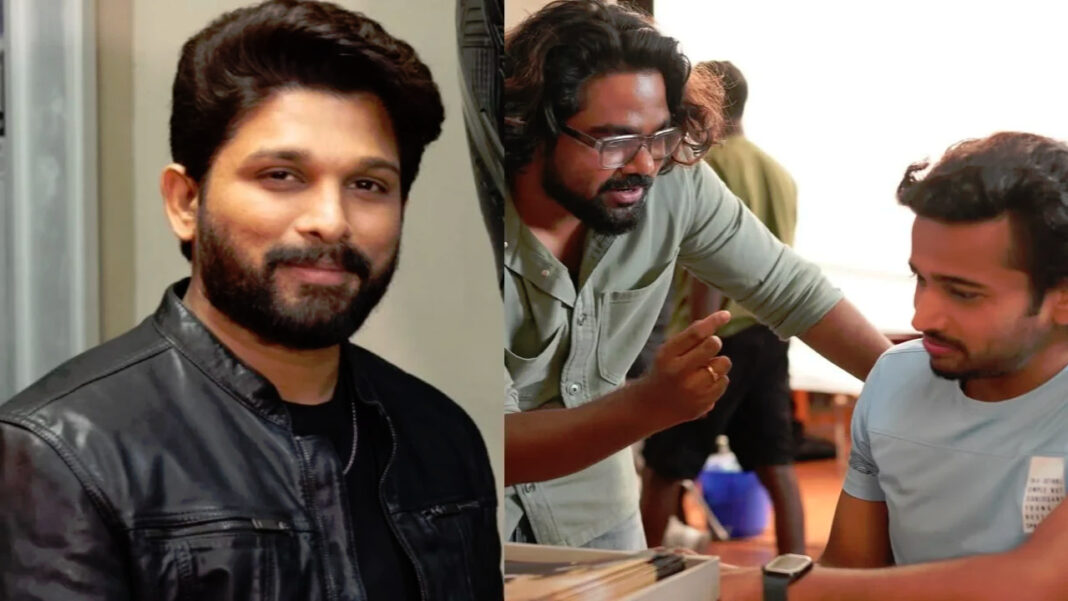

Beyond Shaktimaan: Imagining the Collaboration That Could Redefine Indian Superhero Cinema
Prologue – The Whisper Before the Storm
Cinema often begins not with a script but with a whisper. A rumor, a fleeting image, a name spoken in hushed tones. In May 2026, that whisper carried two names: Allu Arjun, the Telugu megastar whose charisma dances like fire, and Basil Joseph, the director‑actor who turned Minnal Murali into a folk‑superhero phenomenon. The idea of their collaboration was enough to send tremors across industries, fan clubs, and social media timelines. Was this the long‑awaited Shaktimaan reboot? Or was it something stranger, fresher, more untamed?
The prologue is not about answers but about atmosphere. It is the moment when speculation becomes myth, when whispers in corridors of power echo louder than official announcements. And in that liminal space, imagination takes over.
Section I – The Spark of Speculation
The rumor began like a flicker, a candle flame in the wind. Basil Joseph was spotted at Allu Sirish’s wedding, and the sight was enough to ignite chatter. Was this casual camaraderie, or was it the prelude to a collaboration that could shake the foundations of Indian cinema?
Speculation thrives on absence. In the absence of official confirmation, every gesture becomes a clue, every silence becomes a statement. Fans dissected photographs, replayed interviews, and built castles of conjecture. The idea of Arjun stepping into Basil’s cinematic universe felt like a collision of two energies: one rooted in mass spectacle, the other in quirky, heartfelt storytelling.
The industry thrives on such sparks. They are not mere gossip; they are the seeds of anticipation, the currency of curiosity. And when the names involved are Allu Arjun and Basil Joseph, the spark becomes a blaze.
Section II – The Shaktimaan Question
The word Shaktimaan carries weight. It is not just a title; it is a cultural relic, a superhero stitched into the childhood memories of millions. When whispers suggested that Basil Joseph might helm a reboot, the rumor gained mythic proportions. Could Allu Arjun, with his pan‑India charisma, embody the mantle of India’s most iconic superhero?
Athiradi director Arun Anirudhan stepped in to clarify. Speaking candidly, he revealed that he and Minnal Murali co‑writer Paulson Skaria had indeed worked on a screenplay for Shaktimaan. It was supposed to be massive, a cinematic colossus. But it did not go on floors. “No… no. This (Allu Arjun film) has no connection with Shaktimaan. That is something different,” he said, cutting through the fog of speculation.
Yet the denial did not kill the rumor; it transformed it. If not Shaktimaan, then what? The imagination of fans filled the void, conjuring visions of parallel universes, mythic warriors, and superhero sagas yet untold. The Shaktimaan question became less about confirmation and more about possibility.
Section III – Basil Joseph’s Creative Trajectory
To understand why Basil Joseph’s name carries such weight, one must trace his trajectory. From the quirky charm of Kunjiramayanam to the cultural phenomenon of Minnal Murali, Basil has carved a niche as a storyteller who blends humor, heart, and heroism. His cinema is not about spectacle alone; it is about grounding fantasy in the soil of everyday life.
In Athiradi, where he starred alongside Tovino Thomas, Basil explored chaos through the lens of a Gen‑Z student reviving a college fest. The narrative spiraled into madness when a former don‑turned‑musician kidnapped the chief guest. It was absurd, energetic, and deeply human — qualities that define Basil’s creative DNA.
This trajectory matters because it shapes expectations. A Basil Joseph–Allu Arjun collaboration is not imagined as a routine star vehicle. It is envisioned as a fusion of mass energy and quirky storytelling, a film that could straddle spectacle and sincerity.
Section IV – Allu Arjun’s Pan‑India Persona
Allu Arjun is not just a star; he is a phenomenon. His dance moves are studied like martial arts, his dialogues echoed in playgrounds, his films dissected across states. With Pushpa, he cemented his pan‑India identity, becoming a symbol of raw charisma that transcends linguistic boundaries.
Currently filming Raaka with Atlee, a magnum opus exploring parallel universes, Arjun is already pushing boundaries. With Deepika Padukone as co‑lead, the film promises to be a collision of star power and conceptual daring. His subsequent project, AA23 (LK07) with Lokesh Kanagaraj, positions him further in the space of experimental action cinema.
This trajectory makes the Basil Joseph rumor even more tantalizing. Arjun is not in a phase of repetition; he is in a phase of reinvention. To imagine him stepping into Basil’s universe is to imagine a star willing to risk, to experiment, to expand.
Section V – The Cultural Weight of Superhero Cinema in India
Superheroes in India are not imported; they are adapted, reimagined, mythologized. From Hanuman to Shaktimaan, the idea of extraordinary power has always been woven into cultural narratives. Basil Joseph’s Minnal Murali proved that India could craft its own superhero mythos, rooted in local soil yet resonant globally.
The Shaktimaan rumor mattered because it tapped into nostalgia. It was not just about a film; it was about reclaiming a cultural icon. In a landscape where Marvel and DC dominate, the idea of Allu Arjun as Shaktimaan felt like a reclamation of identity, a statement that India could produce its own superhero spectacle.
Even though Arun Anirudhan clarified that the collaboration is not Shaktimaan, the cultural weight of the rumor lingers. It reminds us that superhero cinema in India is not a genre; it is a cultural aspiration.
Section VI – The Imagined Collaboration
Imagine a film where Basil Joseph’s quirky sincerity meets Allu Arjun’s volcanic charisma. The screen would not merely show a hero; it would conjure a myth. Basil’s penchant for grounding fantasy in everyday soil could place Arjun in a narrative where extraordinary power collides with ordinary dilemmas.
Picture Arjun as a reluctant savior, his dance moves reimagined as battle choreography, his dialogues carrying the cadence of myth. Basil’s lens would not glorify him alone; it would weave him into a community, a family, a village. The spectacle would be balanced by sincerity, the chaos by heart.
This imagined collaboration is not about Shaktimaan; it is about possibility. It is about envisioning a cinema where mass and myth, chaos and clarity, spectacle and sincerity coexist.
Section VII – Industry Buzz and Audience Anticipation
The rumor has already reshaped conversations. Trade analysts speculate on budgets, fan clubs design posters, social media timelines erupt with theories. The absence of confirmation has only heightened anticipation. In an industry where announcements often precede imagination, this collaboration thrives on the opposite: imagination preceding announcement.
Audiences are not passive; they are co‑creators of hype. By speculating, by imagining, by debating, they shape the narrative before the film even exists. The Basil‑Arjun rumor exemplifies this dynamic, proving that cinema is not just made in studios but also in conversations, in whispers, in dreams.
Section VIII – The Broader Symbolism
Beyond cinema, the rumor symbolizes collaboration across industries, languages, and genres. It represents the fusion of Telugu mass spectacle with Malayalam sincerity, of pan‑India stardom with quirky storytelling. It is a metaphor for Indian cinema’s evolution, where boundaries blur and collaborations redefine identity.
The Basil‑Arjun rumor is not just about a film; it is about a cultural moment. It is about imagining a cinema that is both rooted and expansive, both local and global, both nostalgic and futuristic.
Conclusion – A Story Still Unfolding
The story of Allu Arjun and Basil Joseph’s rumored collaboration is not about confirmation; it is about imagination. It is about the whispers that become myths, the rumors that become cultural storms. Whether or not the collaboration materializes, the anticipation itself has already written a narrative.
In that narrative, Allu Arjun is not just a star; he is a symbol of reinvention. Basil Joseph is not just a director; he is a storyteller of sincerity. And together, they represent the possibility of a cinema that is both spectacular and soulful.