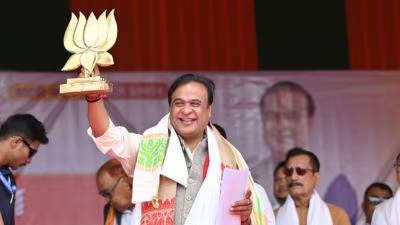

Assam Assembly Polls: With elections on April 9, the BJP mixes incumbents and newcomers to aim for a third term amid multi‑cornered contests.
The political situation in Assam is currently experiencing a combined effect of old political leaders and new political candidates who compete for dominance in the upcoming Assembly elections that will take place on April 9 2026. The Bharatiya Janata Party (BJP) which seeks to win its third consecutive term has developed a candidate selection method that maintains most of its current MLAs while bringing in many new candidates who will change the election process.
The BJP declared its first set of candidates which included 37 current MLAs who would run again as well as 37 new candidates who would compete in the 90 districts that the party plans to contest together with its partners the Asom Gana Parishad (AGP) and the Bodoland People’s Front (BPF). The plan uses dual strategy which combines the advantages of existing legislators with fresh representatives who will help constituencies because they bring new abilities to their roles.
A group of senior BJP leaders who had served long terms in office lost their positions which led some leaders to leave the party while others protested against its new leadership appointments. The established politicians who had worked for many years with the party now either support opposition groups or function as independent political entities who add new dimensions to the electoral process.
The BJP maintains its main supporters because this strategy supports its overall government strategy. Chief Minister Himanta Biswa Sarma who has held political power in Assam for more than 20 years will once again run for election in the Jalukbari constituency which serves as his political base. The party needs to maintain its core MLAs because this strategy will help establish connections with local communities and their voting behaviors which will support their quest for another political term according to analysts.
The electoral contest shows multiple complexities which prevent simple assessment. The Khowang electoral district in Upper Assam sees BJP incumbent Chakradhar Gogoi facing Lurinjyoti Gogoi from Assam Jatiya Parishad which serves as the main opposition party against the INDIA alliance who treats this election as a critical battle that shows regional power dynamics. T
he Chabua-Lahowal electoral district shows current battle lines which emerge when Binod Hazarika from the BJP faces Pranjal Ghatowar from Congress because both parties need to safeguard their strongholds while local situations change and district boundaries shift.
The Lower and Southern Assam region witnesses electoral battles which involve multiple candidates from different political backgrounds including rebels and independents and minor party members because these elections create unpredictable voting scenarios. The BJP-AGP alliance faces off against a coalition that includes Congress and AIUDF and Raijor Dal and other minor political groups which creates three-way electoral battles in Goalpara East and Gauripur constituencies.
The Congress party is using both their existing members and new candidates to contest elections while using symbolic battles as a strategy to win back their lost support. The historic Nazira seat became a major political battle between Debabrata Saikia from the party and Mayur Borgohain from the BJP which demonstrated the Upper Assam power struggle between the two opposing parties.
Polling data indicates that the current ruling BJP-led NDA alliance will win the upcoming election because they will achieve between 87 to 97 parliamentary seats which exceed the required majority for the 126 assembly seats. The findings demonstrate that the BJP possesses effective organizational capabilities while maintaining consistent voter backing, despite the existence of anti-incumbency forces which operate throughout the state.
The campaign will address multiple political issues which include identity politics and local development and land rights together with migration and community rights discussions. Voters in Assam face a choice between established leaders and new candidates which will determine how their governance needs and regional aspirations progress.
The BJP party uses its existing MLAs together with new candidates to build organizational strength while trying to attract voters who want different local leadership. The election results from April 9 will decide Assam’s political direction while showing how voters choose ahead of India’s upcoming assembly elections scheduled for later this year.
Read more:Gold Rate Today, April 6, 2026: 18, 22 & 24 Carat Prices in Major Indian Cities