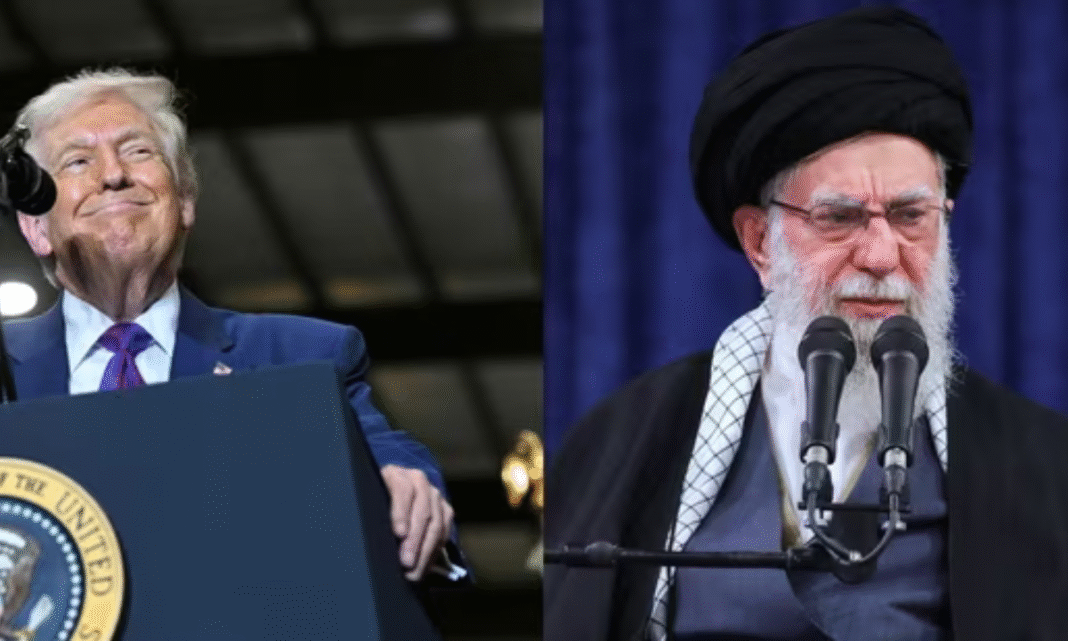

February 20, 2026 : The tensions between Iran and the United States have escalated, with US President Donald Trump giving a tough deadline to Iran to accept a nuclear deal, and Iran giving a stern warning to the US about the possibility of military attacks.
Trump’s Deadline for a Deal: 10-15 Days
US President Donald Trump has given a deadline of 10-15 days to Iran to accept a deal that would limit the country’s nuclear ambitions. He said that if a deal is not reached, “really bad things” could happen, and further actions may follow.
This warning comes at a time when the United States has deployed a large military force in the Middle East, including warships, fighter jets, and other troops deployed in and around the region due to the fear of a possible attack.
Iran’s Stern Warning to the United States
In response to mounting pressure from Washington, Iran has issued a firm warning to the United Nations Secretary-General. Although Iran expressed that it does not seek war, it emphasized that it would take decisive action in the face of any military attack. In the letter, it is emphasized that all U.S. bases, infrastructure, and assets in the region would be considered legitimate targets in the event of an attack on Tehran.
Iran’s UN ambassador emphasized the risks associated with further military escalation and called on the Security Council to take up what Iran considers to be “unlawful threats of force” emanating from Washington.
Diplomacy or Escalation?
Despite Trump’s demand for a deadline, the diplomatic window seems to be closing. Iran has maintained that it is open to negotiations but has already rejected several of Washington’s general demands related to its nuclear program and regional policies.
The impasse is a result of long-standing distrust and has been a consequence of years of sanctions, conflict, and indirect talks. The Geneva talks between U.S. representatives and Iranian negotiators have made little progress, with significant hurdles still in place.
Global Reactions and Regional Implications
The conflict has already attracted international attention, with fears that a misstep or accident could lead to instability in the wider Middle East. The deployment of a second U.S. carrier strike group and increased naval presence indicates the seriousness of the crisis.
Iran’s threat, however, makes one thing clear: the threat is not confined to Iran’s borders. If a conflict breaks out, strategic military bases where American forces are stationed, from the Gulf to Iraq and even the Indian Ocean area, could be in the crosshairs.
What’s next?
With both sides dug in, analysts say the next few days will be critical. If diplomatic efforts stall and tensions continue to escalate, the risk of errors increases, which could draw in other players in the region and disrupt global markets, particularly oil.
Here are key things to watch:
- Will Iran and the U.S. be able to bridge differences in nuclear negotiations?
- Will there be further military action or alerts in the Middle East?
How will other world powers and the United Nations Security Council respond to the situation?
Summary:
President Trump’s ultimatum sets a deadline for Iran to reach a nuclear agreement or face “bad things,” while Iran’s threat makes clear that U.S. military bases would be fair game if attacked, marking one of the most hostile confrontations between the two nations in years.