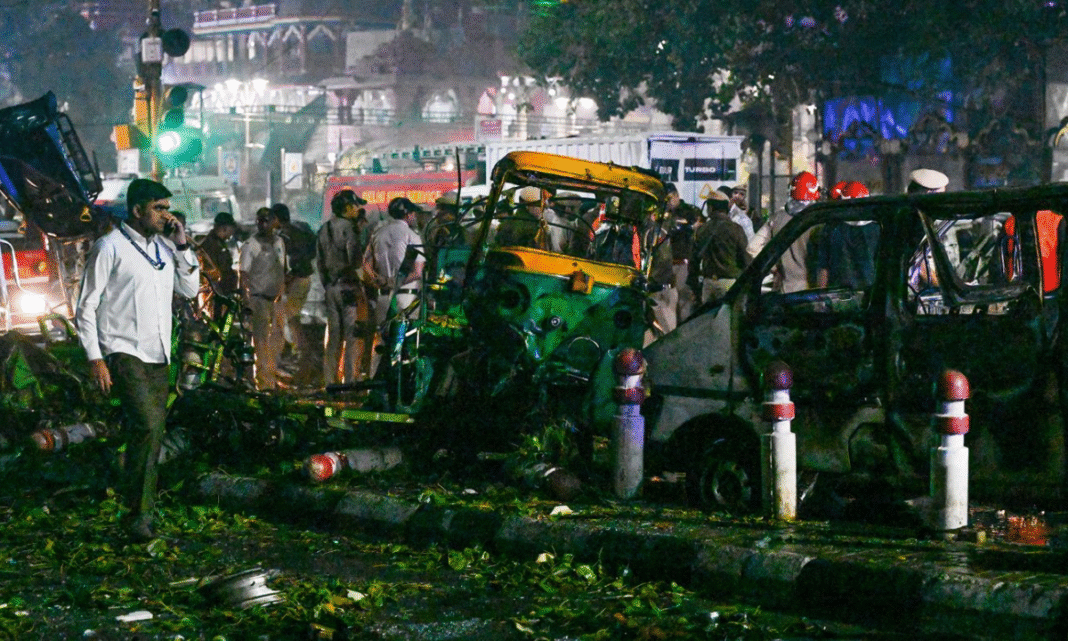

New Delhi, 12 November 2025 – In a major breakthrough in the investigation of the car explosion near the Red Fort metro station that left at least nine people dead and many injured, investigators say a key suspect has admitted to conducting reconnaissance of the area a week before the blast. The suspect, identified as Dr Muzammil Ahmad Ganaie (also referred to simply as “Muzammil”), reportedly told authorities that he and co-accused Dr Umar Un Nabi visited the historic site’s surroundings in advance of the attack.
What the suspect revealed
According to multiple sources within the probe, Muzammil informed investigators that he and Umar undertook a carefully timed reconnaissance mission around the Red Fort complex roughly one week prior to the explosion. They are said to have surveyed vehicular access, nearby parking spots and pedestrian traffic patterns in the early evening hours. The revelation adds weight to the hypothesis that the attack was pre-meditated and meticulously planned.
The blast occurred on the evening of 10 November 2025 when a Hyundai i20 car exploded near Gate No. 1 of the Red Fort Metro Station, on Netaji Subhash Marg. Initial investigations show the vehicle had been parked for several hours before detonation, and forensic teams discovered ammonium nitrate and other explosive material at the scene.
Links to a larger terror module
Investigators trace the probe back to a terror module based near Faridabad, where earlier this week a large cache of explosives—about 2,900 kg—was seized. Sources say Muzammil and Umar were part of this network, which is now being linked to possible involvement of the Jaish‑e‑Mohammad terror group.
Umar is believed to be the driver of the explosive-laden vehicle. His body parts were recovered from the wreckage, and DNA testing is underway to confirm identity and ties to the network.
Security and public impact
The attack near the Red Fort—one of India’s most iconic historical landmarks—has sent shockwaves through the capital. Delhi’s security apparatus has been put on high alert, with rapid deployment of forensic teams, the handing over of the case to the National Investigation Agency (NIA), and urgent directives from senior government officials.
The location’s symbolic value has amplified concerns: the Red Fort hosts India’s Independence Day celebrations and is heavily secured under normal conditions. The fact that the reconnaissance reportedly occurred days earlier and went undetected raises serious questions about surveillance and preventive measures.
What’s next in the investigation
According to probe officials:
-
Forensic labs are expediting DNA analysis of the remains found in the vehicle.
-
Investigators are analysing CCTV footage and toll-plaza entry records to map the movements of the Hyundai i20 in the days leading up to the blast.
-
The network’s logistics, funding, and cross-border links are under scrutiny, especially given the Faridabad explosives seizure and suspect ties to Kashmir.
-
Further arrests are expected in Delhi, Haryana and Jammu & Kashmir, as agencies track the broader terror module.
Why this matters
This case underscores the evolving nature of urban terror threats: the use of professional-looking vehicles, long-halted parking as a tactic, and advance reconnaissance suggest a hybrid model of insurgent planning. The involvement of educated professionals—such as doctors in the accused module—also highlights that radicalisation pathways continue to adapt.
For the public and authorities, the attack is a stark reminder that even high-security zones like the Red Fort transit area are vulnerable. Improved intelligence sharing, real-time monitoring and multi-agency coordination will be critical in preventing follow-on strikes.