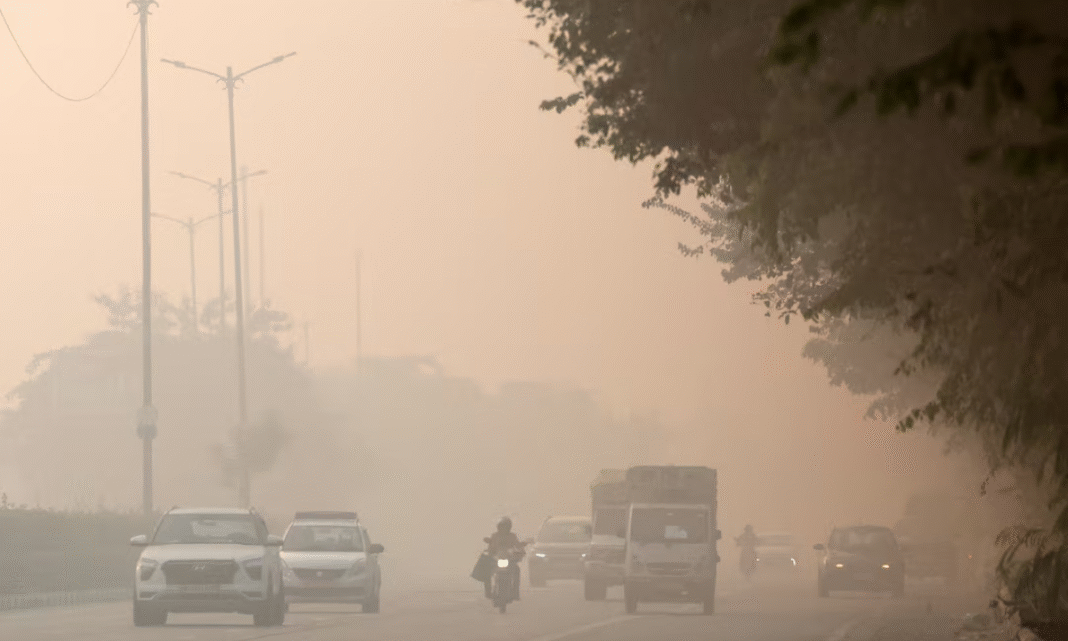

New Delhi, 12 November 2025 – The national capital and surrounding NCR region woke up to a second consecutive day of “severe” air quality, with the 24-hour rolling average of the Central Pollution Control Board (CPCB) hitting 413 at 8 a.m., and a previous reading of 428 late Tuesday afternoon.
What’s happening
-
Several monitoring stations across Delhi recorded an Air Quality Index (AQI) in the “severe” category, defined as 401–450.
-
The city also saw a minimum temperature drop to around 10.4 °C, a factor contributing to pollutant build-up in the lower atmosphere.
-
In response, the Commission for Air Quality Management (CAQM) triggered Stage-III of the Graded Response Action Plan (GRAP) across the National Capital Region, instituting curbs on construction, diesel generators and certain industrial activities.
Why this has escalated
Multiple factors have combined to worsen air quality rapidly:
-
Winter boundary-layer inversion and low temperatures trap pollutants close to the surface.
-
Vehicle emissions, dust from construction, and heating activities remain high as the season changes.
-
Agricultural stubble burning in neighbouring states is known to feed particulate matter into the Delhi air-shed during this period.
Health and societal impacts
With AQI in the “severe” category:
-
Residents with respiratory issues, children and the elderly are at very high risk of adverse health outcomes. Even healthy people may experience irritation in eyes, throat, or lungs.
-
Visibility has worsened in parts of the city, creating possible hazards for traffic and outdoor workers.
-
Schools up to Class 5 have been asked to shift to hybrid (online + in-person) mode where feasible, to reduce children’s exposure.
What authorities are doing
-
Stage-III GRAP restrictions: non-essential construction and stone-crushing units shut; diesel gensets curbed; traffic and industrial controls tightened.
-
The central government has asked for detailed “pollution control” reports from authorities in Delhi-NCR.
-
Public advisories issued: minimise outdoor activity, wear masks (especially N95/FFP2), keep indoor air clean, use air purifiers where possible.
What to expect next
-
If meteorological conditions remain unfavourable (low wind speed, temperature inversion), AQI levels could stay in “severe” or escalate to “severe+” for the next few days.
-
Authorities may implement further restrictions (odd-even traffic, factory shutdowns) if air quality deteriorates further.
-
Long-term, this is a reminder that despite improvements earlier in 2025 (Delhi had its best Jan–Oct air quality in eight years). The onset of the winter pollution season remains a major challenge.